A browser-based QR guide suits a route that visitors follow on their own phones and at their own pace. A touchscreen kiosk suits a fixed place, shared exploration and visitors who cannot use a phone. They can complement each other. Choose by visitor access, room conditions, available connectivity and who will maintain the content.
Choose QR for a route that travels with the visitor
Place a clear invitation beside each code and explain what opens: an audio story, images or more detail. Test scanning in the gallery lighting and loading on a normal visitor connection. Keep a readable web address as an alternative. Browser access avoids an app installation, but batteries, mobile data and access to a suitable phone still matter. V&A visitor research is useful background, not a forecast for your own audience.
Choose a kiosk for a shared moment
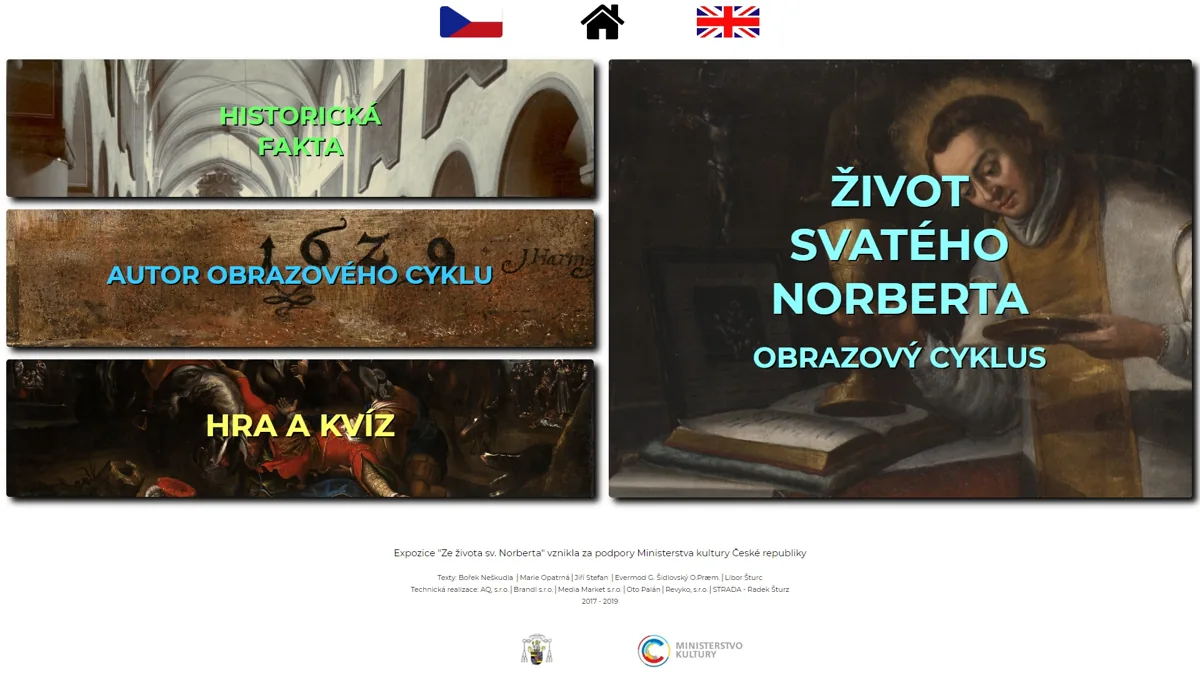
A fixed screen can bring a map, a comparison or a group activity into one place without requiring a visitor-owned device. Its position and the time needed for an interaction matter: a long sequence can create a queue. Strahov Monastery offers a concrete kiosk example, with a timeline, historical content, a quiz and a puzzle developed with a project partner.
Combine them without duplicating the workload
Use a kiosk to introduce the exhibition and a QR guide for deeper stories along the route. Keep an inventory of shared facts, images and language versions, even when the interfaces differ. Decide where updates are approved and test how a visitor changes languages. Offer a non-phone way to reach essential information. Confirm any offline requirements separately for each system.
Before you request a proposal
- Describe individual, family and school-group visits separately.
- Walk the complete route and check signal, lighting and scanning positions.
- Agree an alternative for visitors without a usable phone.
- Compare content, translations, signage, equipment and ongoing updates in the project scope.
Questions worth asking
Is a QR guide always cheaper?
There is no universal price rule. QR can reduce the need for visitor handsets, but content, audio, translations, hosting and maintenance still require a budget.
Can the same stories appear in both systems?
Yes, if reuse is planned. A phone and a shared screen need different text lengths and controls; sharing source material does not mean copying every page unchanged.
Turn the idea into a brief
Tell us how visitors move through your space and which information everyone must be able to access. We can compare a QR route, a kiosk or a combination against that brief.